
Why Proper Infrastructure Matters
In Fredericton, seasonal freeze-thaw cycles place significant stress on residential soil conditions. Much of the region consists of glacial till a variable mix of clay, silt, sand, and stone. As temperatures rise, this material becomes unstable, shifting under hydrostatic pressure caused by snowmelt and spring rainfall.
For pool construction, this is not a cosmetic concern. It is an engineering constraint that directly impacts long-term performance.
Understanding the Risk: Improper Base Preparation
Early-season installations often prioritize speed over stability. In many cases, excavation is followed by basic backfilling using native soil or sand.
This approach introduces two primary risks:
- Water Retention: Fine materials such as sand and clay hold moisture.
- Hydrostatic Pressure: Saturated ground increases upward and lateral force on pool structures.
Over time, these conditions can contribute to:
- Structural shifting
- Surface cracking in surrounding hardscape
- Pool shell movement or misalignment
These outcomes are not immediate but they are predictable when base preparation is inadequate.
Engineered Base Systems: A Structural Approach
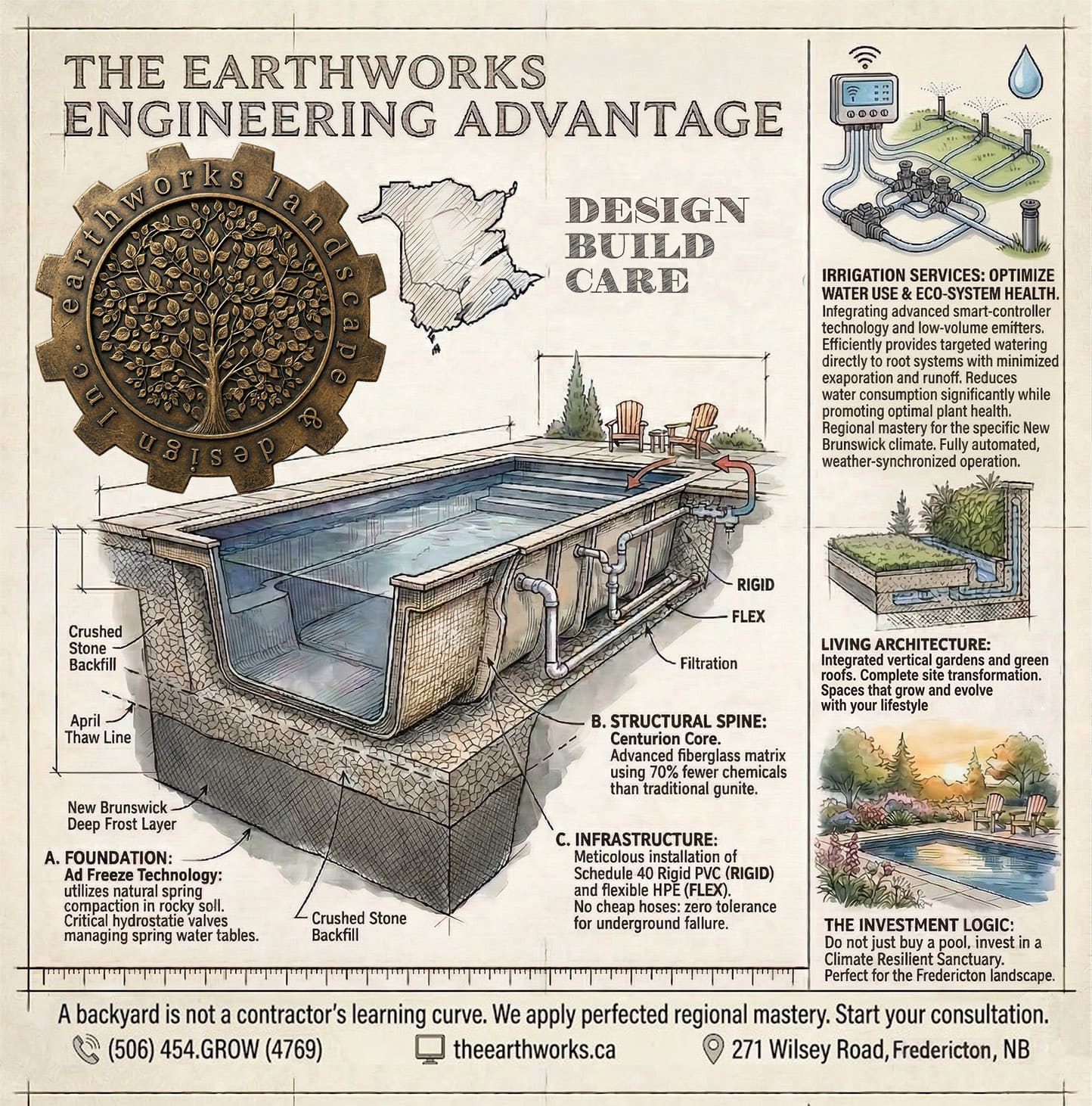
A controlled installation process begins with removing unstable native material from the excavation zone. This step creates a consistent, predictable foundation.
In its place, a compacted crushed stone base is installed. Angular stone provides:
- Mechanical interlock for structural stability
- High drainage capacity to prevent water accumulation
- Resistance to freeze-thaw expansion due to minimal moisture retention
This base layer supports both the pool shell and the surrounding infrastructure, reducing long-term ground movement.
Plumbing Infrastructure: Rigid + Flexible Integration
Pool plumbing systems must accommodate both structural stability and minor ground movement.
A combined system using Schedule 40 rigid PVC and flexible PVC lines allows for:
- Secure, solvent-welded connections at critical junctions
- Controlled flexibility where minor shifts may occur
- Reduced risk of stress fractures in underground lines
This hybrid approach balances durability with adaptability under variable soil conditions.
Fiberglass Pool Construction: Composite Strength
Modern fiberglass pools utilize layered composite construction designed for strength and low permeability.
Key characteristics include:
- Reinforced laminate structure
- Resistance to water absorption
- Consistent structural performance under load
When installed on a properly prepared base, fiberglass shells provide reliable long-term durability in climates with seasonal ground movement.
Installation Context: Built for Real Conditions
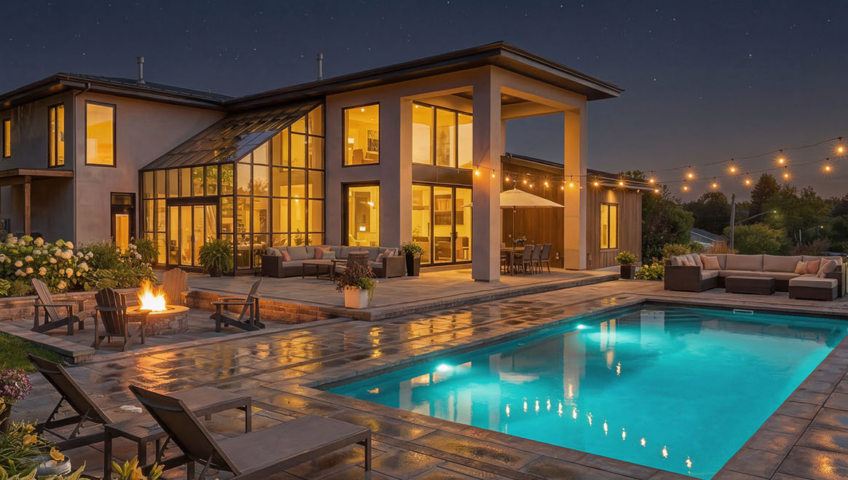
A completed installation is more than the visible pool. It is an integrated system that includes:
- Subsurface base preparation
- Plumbing infrastructure
- Drainage management
- Surface finishing and landscape integration
Each component contributes to overall performance, particularly in regions with variable climate conditions like New Brunswick.
A Process-Driven Approach
At Earthworks Landscaping, the focus is on controlled installation methods and complete project delivery. From excavation to final landscape integration, each phase is executed as part of a unified system rather than isolated tasks.
The objective is straightforward:
build once, with long-term stability in mind.
Plan the Build. Execute in the Right Season.
Pool construction is best approached as a seasonal project, planned and executed under suitable ground conditions.
Crack the ground this summer. Enjoy your space for years.